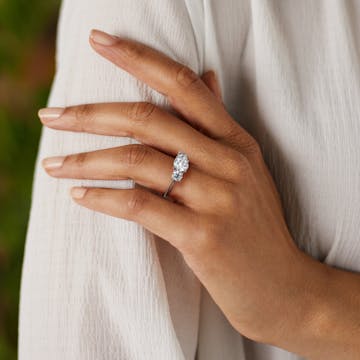


A few years ago, if you’d told me that some of the most sought-after jewellery in Australia would come from a lab rather than a mine, I probably would’ve raised an eyebrow. Diamonds have always carried this sense of romance and tradition – the idea that they’ve travelled millions of years beneath the earth before ending up in a ring or bracelet. But lately, well… the whole conversation around luxury has shifted. Values have shifted. And honestly, I’ve found myself surprisingly captivated by it.
Recently, I spent an afternoon in a Sydney studio with a jeweller who’s been working in the industry for almost four decades. He told me, with the kind of gentle enthusiasm only craftsmen have, that the biggest change he’s seen in his entire career isn’t about design trends or metal preferences. It’s the rise of lab grown diamond bracelets. Not rings, not pendants — bracelets.
“People want beauty,” he said, “but they also want transparency. And bracelets show the diamond quality in the most obvious way. There’s nowhere to hide.”
That stuck with me.
So today, I want to take you a little deeper into why these shimmering pieces are exploding in popularity, what makes them different, and why so many Australians — from minimalist fashion lovers to serious jewellery collectors — are choosing lab grown sparkle for their wrists.
Why Bracelets, and Why Now?
If you watch fashion cycles long enough, you notice that bracelets come in and out of cultural focus. A decade ago it was all about oversized cuffs. Then the dainty stacking trend swept through Instagram. Now? Tennis bracelets — sleek, sparkling, beautifully simple — are everywhere again.
Except there’s a twist.
This time, they aren’t just a symbol of timeless elegance; they’re part of a much bigger movement in conscious luxury.
A tennis bracelet is the kind of piece that shows its diamonds boldly. There’s no centre stone taking attention away, no cluster setting disguising size or clarity. It’s just an uninterrupted string of brilliance circling your wrist. And that means people care — deeply — about the quality, the ethics, and the value of the stones they’re choosing.
Lab grown diamonds fit this moment perfectly.
The Real Magic Behind Lab Diamonds
You might not know this, but lab diamonds aren’t diamond “alternatives.” They’re real diamonds — same chemistry, same crystalline structure, same sparkle that catches the sun at just the right angle and makes you stop for half a breath.
The only difference is where they’re formed.
Instead of being pulled from deep within the earth, lab diamonds grow in a controlled environment using advanced technology that replicates natural processes. It’s a blend of science and art. And as a journalist who’s visited both mining regions and labs, I’ll admit something slightly embarrassing: the lab side feels even a little more magical.
Everything is precise. Clean. Almost futuristic. But the end result isn’t synthetic-looking at all. It’s exactly what you’d expect from a natural diamond — sometimes even better.
This shift is something Australian consumers are noticing. There’s a growing comfort in buying something that’s transparent in origin, traceable, and ethically aligned with modern values. And when it comes to pieces like lab grown diamond bracelets, where you’re buying not just one diamond but dozens, the benefits multiply quickly.
The Price Surprise (and Why It Matters)
Let me share a quick personal moment.
Last year, I was shopping for a gift — a classic tennis bracelet — and I nearly dropped my coffee when I saw the price difference between mined and lab grown options. A comparable mined diamond bracelet cost almost three times as much.
Three times.
For the same look, the same sparkle, and the same longevity.
It’s one of those situations where you sort of do a double-take and ask, “How is this even possible?”
Well, it’s simple economics. Mining is a massive logistical undertaking — machinery, transport, environmental restoration, labour, and decades of infrastructure. Lab production doesn’t have the same overhead.
The result is that you get a luxurious, heirloom-quality piece at a far more accessible price. For many people, it’s not even about affordability in the budget sense — it’s about feeling like they’re making a smart, values-aligned choice without compromising beauty.
If you’re curious what this looks like in practice, this collection of lab grown diamond bracelets gives a pretty good sense of how polished and high-end these pieces can be.
The Style Evolution: From Minimalist to Maximalist
One thing that makes lab grown diamond bracelets so appealing right now is how flexible they are stylistically.
Some days, you throw on jeans and a white tee and a delicate tennis bracelet does all the work — just a subtle flicker every time you reach for your flat white. Other days, you might layer two or three bracelets together with a watch for that slightly bolder, more polished vibe. And then there are evenings when you want to feel effortlessly glamorous, as if you’ve stepped out of a classic film.
Lab-created diamonds slot into all these scenarios beautifully.
Because the stones are more accessible, people are experimenting more — larger carat sizes, unique settings, mixed metals, asymmetrical designs. There’s a confidence around wearing diamonds casually now, where once they felt reserved for special occasions.
One Melbourne stylist I spoke with told me her clients no longer treat diamond bracelets as “investment pieces” to be locked away. Instead, they’re worn daily, loved, stacked, and lived in.
And I think that’s part of the charm. Jewellery should be enjoyed, not guarded.
What About Durability?
A question I get constantly is: “Do lab grown diamonds last?”
Short answer: absolutely.
A diamond’s durability comes from its composition, not its birthplace. Lab diamonds are just as hard as mined ones — scoring a 10 on the Mohs scale — which makes them perfect for bracelets (pieces that do tend to take more daily wear).
I’ve seen lab diamond bracelets passed through families, worn on holidays, taken to weddings, even accidentally knocked against countertops — they handle it all. Same as any diamond would.
Choosing the right setting and metal can add an extra layer of security, but overall, these are heirloom pieces with decades of life ahead of them.
The Ethical and Environmental Question
We can’t talk about lab diamonds without touching on ethics. And I’ll try to keep this grounded and balanced, not preachy.
Mining has a long and complicated history — environmentally, socially, and politically. Some companies do extraordinary work in supporting communities and restoring landscapes. Others… well, not so much.
But even with the best intentions, mining is still mining. It leaves a footprint.
Lab diamond production, on the other hand, tends to use far fewer natural resources, and many labs are transitioning to renewable energy. For Australians who care about conscious consumption (and that number grows every year), this matters.
This broader movement is reflected everywhere — in sustainable fashion, eco-friendly home design, and now, beautifully and almost inevitably, in jewellery. If you want a deeper look at how lab diamonds are reshaping luxury trends, this article on the rise of sustainable sparkle in Australia is a good read:
lab diamonds
The Emotional Part People Don’t Talk About Enough
I know jewellery is often marketed as glamorous or romantic, but in reality, it’s deeply personal.
A bracelet might mark a milestone, a memory, a promise, or a quiet act of self-celebration. I’ve talked with people who bought themselves lab diamond bracelets after getting a promotion, leaving a difficult chapter, celebrating a baby’s first year, or even just because they’d always wanted to own something that truly sparkles.
And what struck me is this: not one person cared that their diamond came from a lab. What they cared about was how wearing it made them feel.
Elegant. Empowered. Confident. Joyful.
That’s the whole point of jewellery.
Are Lab Grown Diamond Bracelets a Passing Trend?
It’s a fair question. After all, every industry has its hype cycles.
But from everything I’ve seen — speaking with jewellers, consumers, designers, and even analysts — lab grown diamonds aren’t a fad. They’re a shift. A permanent one.
The quality is exceptional. The prices are sensible. The ethics align with modern values. And the style… well, diamonds have never really gone out of fashion, have they?
What’s changing is the mindset around what makes jewellery valuable. For an increasing number of Australians, value now includes transparency, sustainability, and emotional connection — not just origin.
How to Choose a Lab Grown Diamond Bracelet That Feels “Right”
If you’re thinking about buying one, here are a few things I’ve learned from jewellers and stylists over the years:
1. Look at the flexibility of the bracelet.
A well-made tennis bracelet should drape smoothly, not sit stiffly.
2. Decide how bold you want to go.
Smaller stones give a subtle, everyday sparkle. Larger stones make a statement.
3. Choose a metal that suits your skin tone.
Yellow gold adds warmth; white gold feels crisp and modern; rose gold brings softness.
4. Pay attention to the setting style.
Four-prong settings are classic; bezel settings feel sleek and secure.
5. Try it on if you can.
Bracelets are like perfume — they feel different on everyone.
A Final Thought Before You Go
Writing about jewellery always reminds me of something a designer told me years ago: “People think diamonds are about luxury, but really, they’re about emotion. We buy them to remember how we want to feel.”
And that’s exactly what’s so compelling about lab grown diamond bracelets. They offer the same brilliance, the same emotional symbolism, the same quiet thrill of seeing something beautiful catch the light — but in a way that fits the world we’re living in now.
If anything, they make luxury feel a little more accessible. A bit more conscious. And maybe — in their own shimmering way — a touch more meaningful.